Recommend this page  
TOP STORY

U.S. energy production growing by leaps and bounds: BP
CNBC
The shale revolution sweeping the U.S. helped push oil production in the world's largest economy to a record last year, BP said in a report this week, underscoring expectations of the nation's energy independence. In a statistical review of energy demand in 2012, the U.S., the world's third-largest oil producer, said energy production rose 1.3 percent to 15 percent of the global total. A bounty of shale and natural gas helped energy supplies set record for the third straight year, according to BP. U.S. production of natural gas surged nearly 5 percent last year, BP said. It is now the largest producer of the gas, with 20 percent of the global total, as well as the biggest consumer of both natural gas and crude oil.


ENERGY

Ask Bill Clinton: How can we encourage homeowners to adopt solar energy?
Bloomberg Businessweek
We need to develop in every state a network of cooperation in which contractors, utilities, building and home owners, tenants, and government agencies understand the shared benefits of solar energy and work together to accelerate its deployment. Our outdated energy grid's outages cost the U.S. economy $25 billion or more every year, according to a recent Morgan Stanley study using Department of Energy data. Recent extreme weather events have had devastating effects on our aging infrastructure and make a stronger case than ever to build a more resilient and reliable energy system. Distributed solar energy will help us to build that resilience and reliability, both for the nation and for individual owners of homes and buildings.

Tracking the fracking: Is the U.S. energy revolution for real?
Fort Mill Times
Complementing reports that United States oil production expanded by 14 percent in 2012, Adolfo Laurenti's latest research note examines how dramatically the shale gas and oil industry is boosting energy state economies like North Dakota and Texas with new jobs and tax revenues. Over a period of years, the new fracking technology is projected to result in millions of new jobs for the overall economy. Laurenti says the optimism is genuine but the timeframe is more long-term than short-term. 'Despite the rapid increase in shale extraction, it will still take several years for the economic consequences to reverberate through the entire economy.'

Solar panel costs drop, fueling rise in renewable energy
Huffington Post
A dramatic drop in the price of solar power technology last year helped the continued growth of renewable energy, according to a U.N.-backed report published. Global energy-generating capacity from renewable sources rose by 115 gigawatts in 2012, compared with 105 gigawatts the previous year, the report by the Paris-based think tank REN21 showed. Installed renewable energy capacity rose to over 1,470 gigawatts, equivalent to about 1,500 nuclear reactors. Two thirds of all renewable capacity still comes from hydropower, but wind and solar have been gaining. The worldwide capacity of photovoltaic cells, which convert sunshine into electricity, reached 100 gigawatts last year, the report said.

U.S. Energy Department creates roadmap to foster geothermal development
Renewable Energy Magazine
The US Department of Energy (DOE) has created an online "roadmap" it hopes will foster the proliferation of geothermal energy projects by helping project developers anticipate the regulatory requirements of the jurisdictions in which their projects are planned. In the works since April 2012, the DOE's Geothermal Regulatory Roadmap (GRR) Team sees its work product as a collaborative tool to facilitate cooperation between planners, as well state and federal regulators and increase the efficiency of their interactions. In addition, they say, the roadmap will help stakeholders understand regulatory processes and timelines and identify potential areas of concern.


ENVIRONMENTAL

U.S. EPA tells Minnesota to do a better job of preventing water pollution
Star Tribune
Federal regulators have ordered Minnesota to impose more stringent limits on pollutants discharged into the state's lakes and rivers, an unusual step that could threaten state authority to enforce the nation's clean-water laws. The order, the first of its kind for Minnesota, was issued by the U.S. Environmental Protection Agency (EPA) in response to a petition from a nonprofit environmental law firm that for years has accused the Minnesota Pollution Control Agency (MPCA) of lax enforcement in protecting the state's waters. The petition focused primarily on municipal wastewater treatment and phosphorus, a damaging contaminant that causes noxious and sometimes toxic algal blooms in lakes and rivers. But some say it also could require the state to tighten up on a wide range of pollutants.

U.S. Senate approves USD 88.2 million for rural renewable energy development
SolarServer
The US Senate passed a comprehensive farm bill that includes support for rural renewable energy producers through the Rural Energy for America Program (REAP). S 954 includes USD 88.2 million in REAP funding over five years, which will support loans and grants for agricultural producers to install renewable energy systems. The bill has been applauded by renewable energy advocates including the 25x25 coalition. House version does not include REAP funding A US House version of the bill does not include funding for REAP and has not yet gone to the House floor a vote. If the House approves this bill, a committee will reconcile the House and Senate versions.

SoCalGas' energy resource center awarded LEED Gold Certification
HeraldOnline.com
Southern California Gas Co.'s (SoCalGas) Energy Resource Center (ERC), a showcase facility where business customers can learn about energy efficiency, alternative fuel transportation and make informed choices about energy consumption and conservation, has achieved LEED Gold certification by the U.S. Green Building Council for existing building operations and maintenance (EBOM). "Since opening in 1995, the Energy Resource Center has been a valuable one-stop, 'idea shop,' where customers can find the most efficient, cost-effective and environmentally sensitive solutions to their energy needs," said Rodger Schwecke, vice president of customer solutions at SoCalGas. "Earning LEED Gold certification is a significant milestone for SoCalGas. The facility serves the community by demonstrating ways we all can move toward a more sustainable energy future."

Chicago lags behind Milwaukee in building green infrastructure
JSonline,com
April's torrential rains in Chicago highlighted the city's inability to control storm water, as sewage backed up into basements, neighborhoods flooded and the city poured nearly 11 billion gallons of untreated wastewater into Lake Michigan, the Chicago Tribune reports. Although Chicago continues to expand its deep tunnel system of stormwater storage tunnels and flood-control reservoirs, the city is falling behind aggressive efforts in Milwaukee, Philadelphia and elsewhere to build so-called green infrastructure, according to the newspaper.


INFRASTRUCTURE

Rahall asks for speedier update to bridge standards
WVGazette.com
In the wake of last month's bridge collapse in Washington state, Rep. Nick Rahall, D-W.Va., is asking the U.S. Department of Transportation to speed up its implementation of new bridge inspection standards and requirements. A highway law passed in 2012 requires the DOT to update its qualifications for bridge inspectors and its standards for when and how bridges should be inspected. But the law, The Moving Ahead for Progress in the 21st Century Act, gave the DOT three years to make the changes. In a letter sent Rahall, the ranking Democrat on the House Transportation and Infrastructure Committee, urged U.S. Transportation Secretary Ray LaHood to pick up the pace.

CGI: Chicago: Mayors take the lead on building infrastructure
Examiner
Chicago Mayor Rahm Emanuel, who Time Magazine recently dubbed the "Chicago Bull" in a profile article on the sometimes combative mayor people either love or hate, hosted a meeting of the Infrastructure Financing for Cities Task Force [IFC], the group's third such gathering. In remarks he made morning preceding the person everyone was most eager to see and hear, former First Lady and now retired Secretary of State Hillary Clinton, Emanuel talked to the crowd, with three other big city mayors standing on stage with him and former President Bill Clinton at the 2013 Clinton Global Initiative underway in Chicago.

How much bang do we get for our infrastructure buck?
Mother Jones
Responding to a CAP report about how to grow the economy, Josh Barro pushes back on the contention that we have a serious infrastructure problem. Setting that aside for the moment, his follow-up comment is worth addressing: The real U.S. infrastructure gap is a cost gap: Big public construction projects cost way more here than they do in other countries. Why would we make a major new financial commitment to infrastructure before fixing the problem that we pay way too much for what we do build? Is this true? I don't doubt that it costs more to build public infrastructure in America than it does in, say, China or Mexico. But is it more expensive than in Spain or Germany or Denmark? If so, why?

AXION expands IP portfolio with patent addressing use of recycled plastics on bridges
NBC News
AXION International Holdings, Inc. (OTCQB: AXIH), a leader in recycled plastic and plastic composite technologies used to produce ECOTRAX railties and STRUXURE building products, today announced the United States Patent and Trademark Office has issued No. 8,455,588. The patent is issued to Rutgers University and licensed to AXION exclusively in the United States and various international territories. Titled, "Use of Recycled Plastics for Structural Building Forms," the patent addresses bridges constructed from modular thermoplastic structural members such as I-beams and tongue & groove boards. These interlocking assemblies are made from AXION's proprietary and patented material formulations using 100 percent recycled materials. Advancements in the methods of interlocking composite building materials covered in this patent further improves the load bearing specifications of AXION's STRUXURE and ECOTRAX products.


TRANSPORTATION

Sen. Murray warns about crumbling infrastructure
Q13FOX.com
Sen. Patty Murray, D-Wash., announced that the federal government will pony up almost $16 million for both the temporary and permanent repairs to the collapsed Interstate 5 bridge over the Skagit River. That's more than 90 percent of the total cost; the rest will be paid by the state. Murray says the collapse should be a 'wake-up call' for us all. 'We can't take our transportation infrastructure for granted, because like everything else, it just doesn't last forever,' Murray said. Her announcement about the federal money came at a transportation hearing she chaired in Washington, D.C., titled, 'Our Crumbling Infrastructure.' While many in the state take the Skagit River collapse as a reason to take a good, hard look at Washington's aging roads and bridges, Murray's concern is much wider. She's using the occasion to inspect the entire country's roads and bridges, which, she said, are starved of funds.

California spends $18.69m on hydrogen fuel cell infrastructure
New Energy World Network
The California Energy Commission has approved $18.69m for projects aimed at expanding the US states fueling infrastructure for hydrogen fuel cell vehicles. California has identified hydrogen fuel cell vehicles as playing an important role in reducing its greenhouse gas emissions. 'California has a portfolio approach to investing in renewable and alternative fuel vehicles,' said Energy Commissioner Janea Scott. 'The investments the Commission made in hydrogen fueling today can help support Governor Brown's zero emission vehicles executive order, which sets a long-term target of reaching 1.5 million zero emission vehicles by 2025.'

Official says Polk needs to widen involvement in transportation issues
TheLedger.com
Polk County should become more actively involved in regional transportation planning throughout Central Florida, the Transportation Planning Organization was told. 'Maybe it's time for us to take a more proactive role in visioning for the Tampa Bay and Orlando areas; we need to be at the table, we're not sure what the right model is,'' said Tom Deardorff, TPO director. He said this discussion will continue at the meeting when the panel will hear a presentation from transportation officials from the Tampa area. Deardorff said he sees Polk's role as leading the discussion of what the important regional transportation connections should be.

Bridge improvements on 422 slated with increased transportation funding
LowerProvidencePatch
PennDOT Secretary Barry J. Schoch today announced that much-needed bridge improvements on U.S. 422 would likely be among the projects that would move forward if a plan to provide additional transportation funding, like that introduced by Governor Tom Corbett in February, is passed by the General Assembly this year. During the event at the regional PennDOT Traffic Management Center, Schoch underscored the need for additional transportation investment in order to improve safety, spur economic development and improve traffic flow in the Philadelphia region and across Pennsylvania.


WATER / WASTEWATER

Fracking can strain U.S. water supplies
Center for American Progress
As the level of hydraulic fracturing of oil and gas wells in the United States has intensified in recent years, much of the mounting public concern has centered on fears that underground water supplies could be contaminated with the toxic chemicals used in the well-stimulation technique that cracks rock formations and releases trapped oil and gas. But in some parts of the country, worries are also growing about fracking's effect on water supply, as the water-intensive process stirs competition for the resources already stretched thin by drought or other factors. Every fracking job requires 2 million to 4 million gallons of water, according to the Groundwater Protection Council. The Environmental Protection Agency, or EPA, has estimated that the 35,000 oil and gas wells used for fracking consume between 70 billion and 140 billion gallons of water each year.

Got water? Keeping it flowing could get expensive
CNBC
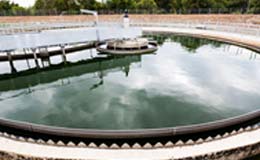
America's water systemits treatment plants and pipesis in need of very serious repair if the country is to have safe drinking water, experts say. And it won't come cheap. "This is serious, and if it's not fixed, we could see a breakout of diseases from unsafe water," said Shafiqul Islam, a professor and director of the Water Diplomacy Initiative at Tufts University. "Every two minutes there's a water pipe breaking in the U.S.," he said. "We've been putting band aids on this, but we can't do that anymore." The Environmental Protection Agency released a report in April saying the U.S. water infrastructure would need $384 billion in upgrades from 2011 through 2030. That's up from the $335 billion the EPA projected in 2007 for the same time period.

Spillway modification at L.L. Anderson Dam improves safety and efficiency
HydroWorld.com
When spillway capacity at L.L. Anderson Dam caused concern to the U.S. Army Corps of Engineers, which owns Folsom Dam downstream, MWH Global designed modifications to the spillway by increasing its capacity, reducing the risk to the people and communities downstream while maintaining the dam's ability to impound water for domestic and irrigation water supply and power generation. As a major component of Placer County Water Agency's (PCWA) Middle Fork American River Hydroelectric Project, L.L. Anderson Dam impounds a 135,000-acre reservoir in the headwaters of the Middle Fork of the American River, a significant tributary of the Folsom Dam watershed. The reservoir provides water for irrigation and domestic uses and electricity generation at the 17-MW French Meadows powerhouse (supplied by L.L. Anderson Dam in adjacent watershed via connecting tunnel), and four additional downstream powerhouses.

Aging water infrastructure puts New Jersey's economic development at risk
BusinessWire
'When it comes to the condition of New Jersey's water infrastructure, Superstorm Sandy was yet another wakeup call that we've been sounding for several years now,' New Jersey American Water Vice President of Operations Stephen Schmitt told an audience of business leaders at the Building a Sustainable Infrastructure After Sandy Conference put on by NJ Spotlight at the Trenton War Memorial. The conference, which featured utility and government leaders, was designed to evaluate the need, plans and costs for a more robust utility infrastructure in New Jersey, particularly in light of Sandy's impact.


Tapco Tools, the originator of the portable siding brake, offers a plethora of siding brakes that help properly fabricate everything from chimney flashing and drip edges to steel wall panels, soffit and custom brickmold. Tapco Tools' most advanced portable brake, the PRO 50, features a moving pivot hinge, 180-degree hemming capability and 1/4" bend capability. It bends soft aluminum to .030, galvanized steel to 28 ga. and copper sheet and coil to 16 oz.
http://tapcotools.com


Aiweekly.biz - Copyright 2013 Peninsula Publishing Inc - All rights reserved.  
T. 949.631.0308   F. 949.631.2475    

Vol.5 No. 60
June 17,   2013 
Archives
Subscribe
Advertisers
Contact


Follow us on LinkedIN!


Plastic Pipe


Cscript src='" + gaJsHost + "google-analytics.com/ga.js' type='text/javascript'%3E%3C/script%3E"));